9 Best RWA Crypto Projects to Watch in 2026
RWA crypto projects bring real-world assets like property, bonds, and loans onto the blockchain by turning them into digital tokens. This allows anyone to invest in these assets easily, earn real yield, and trade them just like crypto.
Real-world asset (RWA) crypto projects are quickly becoming one of the most talked-about areas in Web3, but for many people, the space still feels confusing and hard to navigate. You might be wondering which projects actually matter, which ones have real use cases, and whether this trend is just another cycle of hype.
That confusion is valid. RWA tokenization sits at the intersection of traditional finance and blockchain, two systems that operate very differently. While the idea of turning real assets like real estate, credit, or infrastructure into digital tokens sounds promising, it is not always clear which platforms are doing it in a scalable and compliant way.
The opportunity, however, is too big to ignore. According to a joint report by Ripple and Boston Consulting Group, the tokenized asset market could reach $18.9 trillion by 2033, highlighting massive institutional interest in this sector.
In this guide, you will learn what real-world asset tokenization actually means, why RWAs are gaining momentum, and which emerging RWA crypto projects could see significant growth in the coming years.
What Are Real-World Assets (RWAs) in Crypto?
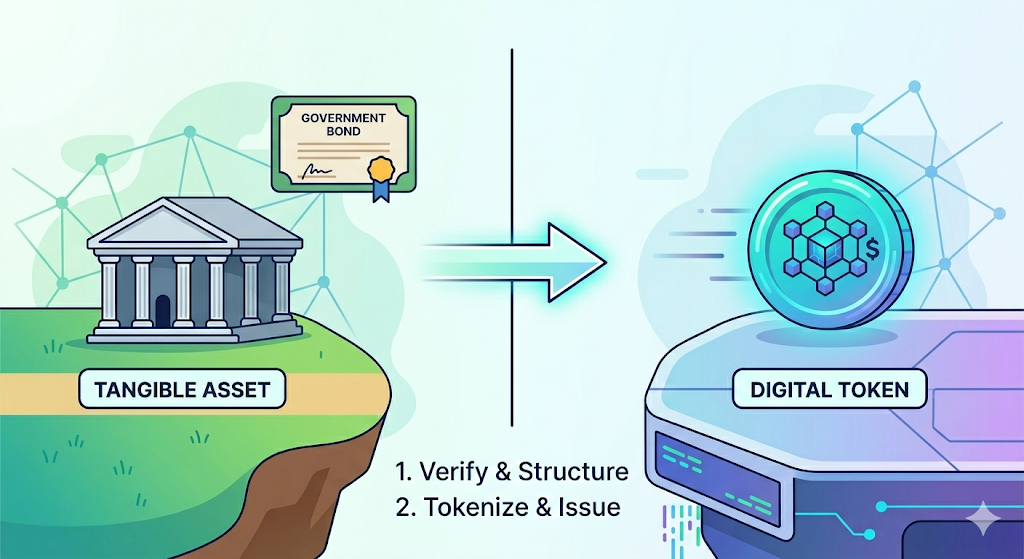
Real-world assets (RWAs) in crypto are physical or traditional financial assets that have been brought onto the blockchain through a process called tokenization. Think of it as giving a real-world asset a digital passport. That passport lives on the blockchain, and you can buy, sell, or trade it just like any other crypto token.
RWAs are fundamentally different from traditional cryptocurrencies like Bitcoin or Ethereum. Bitcoin has no underlying physical asset backing it. An RWA token, on the other hand, represents ownership of something tangible, a building, a government bond, a bar of gold.
The range of assets being tokenized today is surprisingly broad. Real estate is one of the biggest categories. Instead of buying an entire property, you can own a fraction of it through a token. Treasury bonds are another major one.
Projects like Ondo Finance let you invest in U.S. government bonds directly on-chain. Beyond that, commodities like gold and oil, corporate invoices, and private credit (loans made outside the traditional banking system) are all being tokenized too.
We break down RWA crypto, how it works, where it’s used, and the risks you should know. Read the full guide here.
How Real-World Assets (RWAs) in Crypto Actually Works
The process is fairly straightforward.
First, a real-world asset is verified and legally structured off-chain. Then, a smart contract (a self-executing piece of code on the blockchain) creates a digital token that represents ownership or a claim on that asset. Finally, that token is issued and made available on-chain. Platforms like Chainlink provide the real-world data feeds that keep the token’s value tied accurately to the underlying asset.
What Factors Should Investors Consider Before Investing in the Best RWA Crypto Projects?
Not every RWA project is worth your money. The sector is growing fast, and that attracts both genuinely strong projects and a lot of noise. Before putting capital into any RWA crypto project, there are five things worth looking at closely.
Token Utility
Ask yourself: what does the token actually do? A token with real utility powers the protocol. It might be used for governance (voting on protocol decisions), fee payment, or staking to earn yield.
Institutional Adoption
Institutional interest is one of the strongest signals of legitimacy in the RWA sector. When major players like BlackRock, Franklin Templeton, or JPMorgan are involved, it tells you the project has passed serious due diligence. BlackRock’s BUIDL fund, for instance, brought significant credibility to tokenized treasuries as a category.
TVL Growth
TVL stands for Total Value Locked. It measures how much capital is sitting inside a protocol. A rising TVL means more users are trusting the platform with real money. Falling TVL, especially in a growing market, is worth investigating.
Regulatory Compliance
RWA projects operate at the intersection of crypto and traditional finance, which means regulation matters more here than almost anywhere else in crypto. Look for projects that are transparent about their legal structure, work with licensed custodians, and operate in clear regulatory frameworks.
Ecosystem Partnerships
Strong partnerships signal that a project is building real infrastructure. Look for integrations with established blockchains, data providers like Chainlink, or traditional financial institutions.
Which Are the Best RWA Crypto Projects to Watch Right Now?
The RWA crypto space has exploded with projects, but only a handful are building something with genuine staying power. The best ones share three things: real assets backing them, serious capital flowing in, and actual users.
1. Chainlink (LINK)
Chainlink (LINK) is the backbone the entire RWA ecosystem quietly depends on. It does not tokenize assets itself. Instead, it makes sure tokenized assets stay honest. Its oracle networks pull verified real-world data, prices, reserve balances, payment confirmations, directly into blockchain applications.
Its Proof of Reserve system automatically checks that a tokenized asset is actually backed by what it claims. Institutions like JPMorgan, SWIFT, Fidelity, and BNY Mellon already work with Chainlink for tokenized settlements. Without infrastructure like this, the whole RWA sector falls apart.
2. Ondo Finance (ONDO)

Ondo Finance (ONDO) does something deceptively simple: it puts U.S. Treasury bonds on the blockchain. You earn real government bond yield through your crypto wallet, no broker, no paperwork. Its USDY token works like a stablecoin that pays you daily interest backed by actual Treasuries.
Ondo crossed $2.5 billion in TVL by early 2026, cementing its place as the largest tokenized treasury platform globally. It is textbook institutional-grade yield, made accessible to anyone.
3. Centrifuge (CFG)
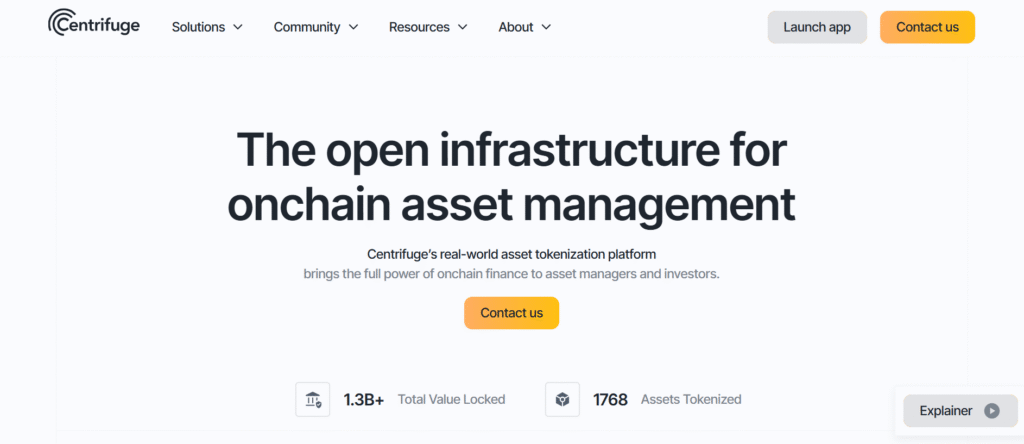
Centrifuge (CFG) takes real-world debt, invoices, mortgages, business loans, and turns it into on-chain investment opportunities. A small business waiting 90 days on an invoice can get paid now. The investor on the other side earns yield from that real economic activity.
Centrifuge has surpassed $1.45 billion in TVL, backed by partnerships with Janus Henderson and S&P Dow Jones Indices. It is one of the oldest and most battle-tested RWA protocols around.
4. MakerDAO/Sky (MKR/SKY)
MakerDAO/Sky (MKR/SKY) created DAI, one of DeFi’s most trusted stablecoins, and quietly backed a large portion of it with real-world assets like U.S. Treasury bills. RWAs generated nearly 80% of MakerDAO’s fee revenue over the past year, proof that real-world collateral can anchor even the most decentralized financial systems.
Goldfinch (GFI)
Goldfinch (GFI) funds real businesses in emerging markets without requiring crypto collateral. Human auditors vet borrowers based on actual business performance. The protocol has deployed over $170 million in loans at an average 12% APR. It is one of the most genuinely impactful use cases in the entire RWA sector.
Which are the Best Emerging RWA Crypto Projects?
Real-world asset (RWA) crypto is no longer just a trend people talk about. It is slowly becoming a practical way to bring real assets like real estate, loans, and infrastructure onto the blockchain.
1. Realio
Realio focuses on regulated tokenization of assets like real estate and private equity. This is important because compliance, or following legal rules, is one of the biggest barriers in RWA crypto. Realio tries to solve this by combining blockchain with identity verification and legal frameworks. As reports highlight, regulated tokenization is key to institutional adoption.
2. Clearpool
Clearpool is building decentralized credit markets. Normally in DeFi, you need to deposit more money than you borrow. This is called overcollateralization. Clearpool changes that by allowing undercollateralized loans, meaning borrowers do not need to lock excessive funds. Instead, it uses creditworthiness, similar to traditional finance. This shift toward credit-based lending is seen as a major evolution in DeFi.
3. Maple Finance
Maple Finance works in a similar space but is more established. It provides structured loans to vetted institutions. “Structured credit” simply means loans designed with risk controls and repayment terms. Maple has already issued billions in loans, showing that institutional DeFi lending can work beyond theory.
4. Plume Network
Plume Network is taking a slightly different approach. Instead of just one platform, it is building a full ecosystem focused only on RWAs. Its goal is to make tokenized assets usable across DeFi apps. This is called composability, which means different apps can interact with the same assets. Plume has already brought over $100 million in solar assets on-chain and is positioning itself as an infrastructure layer.
Why these projects stand out?
All these projects focus on three things. Real yield, which means actual income from real assets. Institutional access, meaning large investors can participate. And regulatory alignment, which reduces legal risk.
Frequently Asked Questions
What Are the biggest risks associated with RWA crypto projects?
The biggest risk is regulatory uncertainty. Since RWAs involve real assets like property or loans, they fall under financial laws that vary across countries. A sudden regulatory change can affect how these tokens are issued or traded.
Another key risk is counterparty risk, which means you rely on a third party to actually manage or hold the real asset. If that entity fails or mismanages funds, your on-chain token may lose value.
There is also liquidity risk. Even though tokenization aims to make assets easier to trade, many RWA markets are still new and may not have enough buyers and sellers yet. Tokenization introduces efficiency but also new financial stability concerns if not properly regulated.
Could RWAs become the llargest sector in crypto?
RWAs have a strong chance of becoming one of the largest sectors in crypto because they connect blockchain with real economic value. Unlike purely speculative tokens, RWAs generate real yield, which means income from actual assets like bonds or credit.
Institutional interest is also growing rapidly. That said, growth depends heavily on regulation, infrastructure, and adoption. RWAs may not replace all of crypto, but they are likely to become a core pillar of the ecosystem.
How do the best RWA crypto projects actually generate yield?
RWA crypto projects generate yield by linking tokens to income-producing real-world assets. For example, a token could represent a share in a loan, real estate property, or treasury bond. The returns generated by these assets, such as interest or rent, are then distributed to token holders.
This is different from traditional DeFi, where yields often come from incentives or token emissions. RWAs focus more on sustainable and predictable returns. According to a CoinGecko RWA report, this shift toward real yield is one of the main reasons investors are moving toward RWA protocols.