8 Best BNB Chain DApps in 2026 (Top DeFi, Trading & Web3 Apps)
Best dapps on Binance, like PancakeSwap, 1inch, Aster Protocol, etc., are decentralized applications built on the BNB Smart Chain that enable users to trade, lend, stake, and interact with Web3 services without centralized intermediaries. They operate through smart contracts, offering fast transactions and low fees while powering a large DeFi and Web3 ecosystem.
And these BNB Chain dApps are exploding in popularity, and if you’ve ever watched a $10 crypto swap turn into a $40 gas fee on Ethereum, you already know why. High fees and slow confirmations push a lot of users to look for faster, cheaper alternatives. That’s where BNB Chain steps in.
DApps (decentralized applications) run on blockchain networks instead of company servers. No middlemen. Just smart contracts executing automatically. And on BNB Chain, transactions usually settle in around 3 seconds with fees often under $1. That speed and cost advantage has helped BNB Chain grow into one of the largest DeFi ecosystems by total value locked.
But here’s the catch: not every Binance ecosystem DApp is worth your money. Hype projects, rug pulls, and smart contract bugs are real risks, especially in fast-moving environments.
This guide cuts through the noise. We break down the best BNB Chain DApps, based on real usage, liquidity, and security, not social media trends, so you can explore confidently without learning the hard way.
What Are BNB Chain DApps?
BNB Chain DApps are decentralized applications that run on the BNB Smart Chain instead of centralized company servers, using smart contracts to execute transactions automatically through crypto wallets like MetaMask or Binance Web3 Wallet.
A traditional app, say your banking app, runs on the bank’s private servers. The company controls the rules, your access, and your data. If they change the policy, you adjust. If they freeze your account, you wait.
BNB Chain DApps flip that model.
These decentralized applications on BNB Chain run on a public blockchain network. Instead of a company approving actions, smart contracts handle everything. A smart contract is self-executing code. If you swap tokens, stake crypto, or lend assets, the contract processes it automatically once conditions are met. No support tickets. No manual approval.
That’s how DeFi apps on Binance and other web3 DApps on BNB Chain operate.
Now, here’s where confusion happens:
- Binance Exchange: A centralized trading platform where Binance controls the system.
- BNB Chain: The blockchain network where smart contract DApps live.
- Binance Web3 Wallet: A wallet that lets you connect to BNB Chain ecosystem apps.
DApps don’t live inside the Binance exchange app. To use the best Binance wallet DApps, you connect your wallet directly to the application’s website. Your wallet acts like your login and your digital signature combined.
Decentralization on BNB Chain means smart contracts replace middlemen, transactions execute automatically, publicly, and cheaply, with most actions costing under $1. The tradeoff is fewer validators than networks like Ethereum, which means greater efficiency but a more centralized structure.
Read our in-depth guide to BNB Chain if you want to go deeper on how it works and what sets it apart.
How We Selected the Best BNB Chain DApps
We selected the best BNB Chain DApps based on real capital committed (TVL), active users, liquidity depth, security history, longevity, and actual utility, not hype. The goal was simple: highlight decentralized applications on BNB Chain that people genuinely use and trust.
Total Value Locked (TVL)
This shows how much capital users have deposited into a protocol. Billions locked in a DeFi app signal confidence. It’s not flawless, but it’s a strong baseline when assessing top DeFi protocols on BNB Chain.
Active Users & Transactions Volume
This matters more than social buzz. We looked at real wallet interactions and daily activity. Ghost towns didn’t qualify.
Liquidity Depth
This reduces slippage. For trading-focused Binance Smart Chain DApps, deep liquidity means smoother execution.
Security & Audit History
This was critical. We checked third-party audits, exploit responses, and transparency practices. “Top audited DApps on BNB Chain” isn’t just marketing. It’s risk control.
Longevity & Ecosystem Role
This also mattered. Apps that survived multiple cycles carry more weight than brand-new launches.
We relied on on-chain analytics, BscScan data, DeFi dashboards, audit reports, and industry research to identify reliable BNB Chain ecosystem apps.
8 Best DApps on BNB Chain
The best DApps on BNB Chain include dominant DeFi protocols like PancakeSwap and Venus, liquid staking platforms like ListaDAO, perpetual exchanges like Aster, infrastructure tools like 1inch and Stargate, and growth platforms like Galxe and Four.meme.
1. PancakeSwap
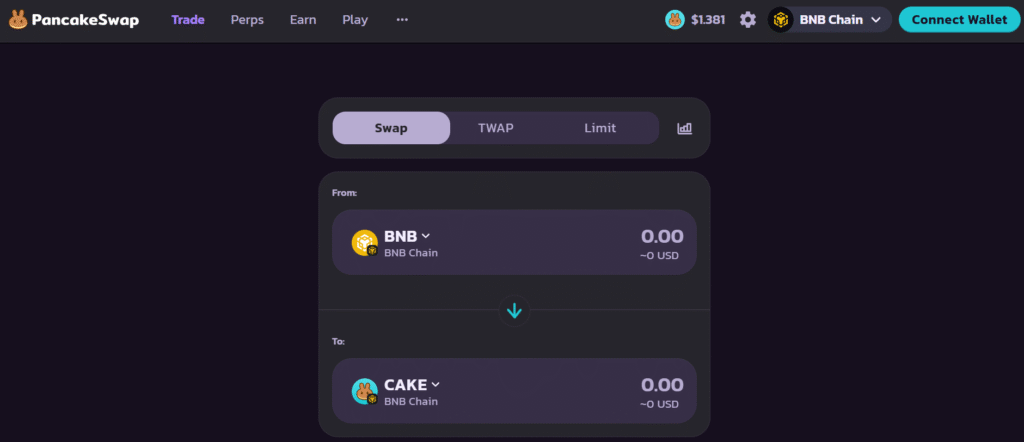
The backbone of decentralized finance on BNB Chain. PancakeSwap is a DEX where users swap tokens, provide liquidity, and farm yield.
It remained the largest DeFi protocol on BNB Chain in Q4 2025, ending the quarter with $2.2 billion in TVL and a 33.5% market share. Across all of 2025, the platform recorded a record $2.36 trillion in total trading volume and closed the year as the largest DEX globally by trading volume and market share, with 35 million traders. Deep liquidity keeps slippage low, but liquidity providers face impermanent loss and farming rewards can fluctuate sharply.
2. Venus Protocol
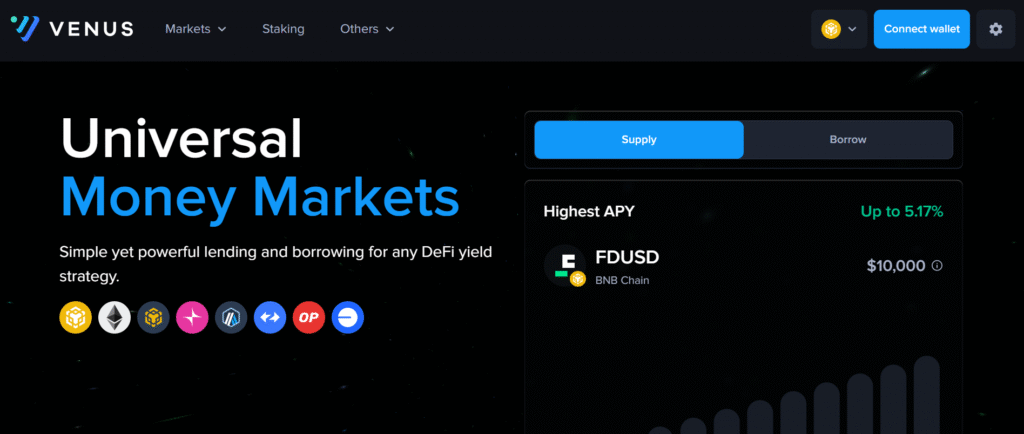
BNB Chain’s primary lending and borrowing market. Users deposit assets to earn yield or borrow against collateral, with overcollateralization required, meaning you must deposit more than you borrow.
Venus ended Q4 2025 with $1.4 billion in TVL, representing a 21.1% market share, though TVL fell 27.7% quarter-over-quarter amid reduced borrowing demand and broader market deleveraging. At its peak, the protocol held over $7 billion in assets. Worth noting: in September 2025, the protocol was hit by a $27 million exploit stemming from a malicious contract update, forcing a temporary halt of withdrawals and liquidations, though the funds were ultimately recovered. If prices drop too fast, liquidation risk kicks in automatically.
3. ListaDAO
A leading liquid staking protocol on BNB Chain. Users stake BNB and receive slisBNB, a token representing their staked position while remaining usable across other DeFi apps.
Lista DAO closed Q4 2025 as the second-largest protocol on BNB Chain with $1.5 billion in TVL and a 23.4% market share. By the end of Q4, 1.2 million BNB worth approximately $1 billion had been deposited into liquid staking solutions, up 52.9% year-over-year. Liquid staking improves capital efficiency, but smart contract risk still applies.
4. Aster Protocol
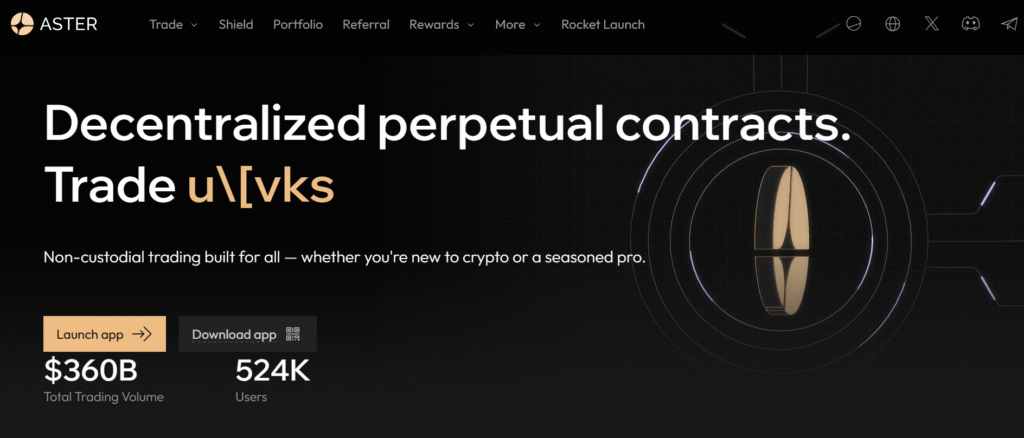
A perpetual DEX offering leveraged trading on-chain. Aster saw the sharpest TVL contraction among large BNB Chain protocols in Q4 2025, falling 51.6% to $598.2 million. Traders can amplify positions, but leverage magnifies losses just as quickly. Some analysts have raised scrutiny around reported volumes, so due diligence is key.
5. 1inch (BNB Deployment)
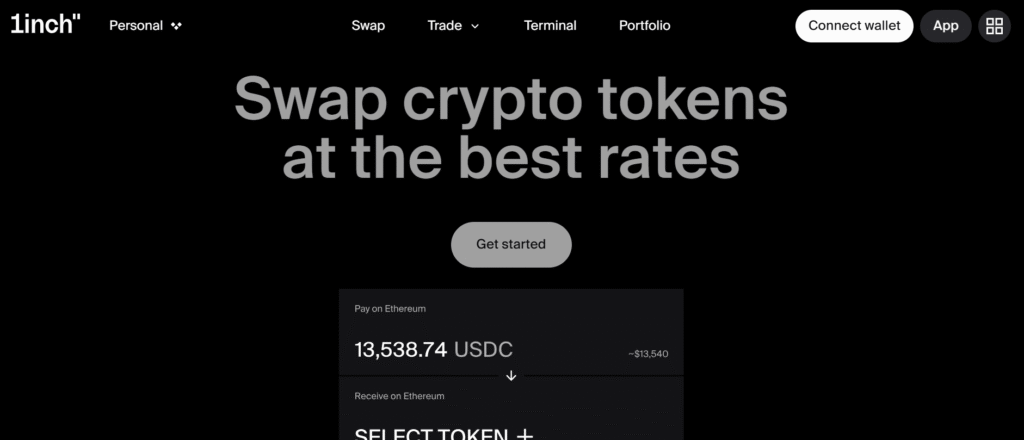
A DEX aggregator that scans multiple liquidity pools for better pricing rather than routing through a single exchange. 1inch BNB Chain averaged $2.7 billion in daily DEX volume in Q4 2025, ranking second globally among all chains by DEX volume. For larger trades, routing across that liquidity depth through an aggregator can meaningfully reduce slippage.
6. Stargate Finance
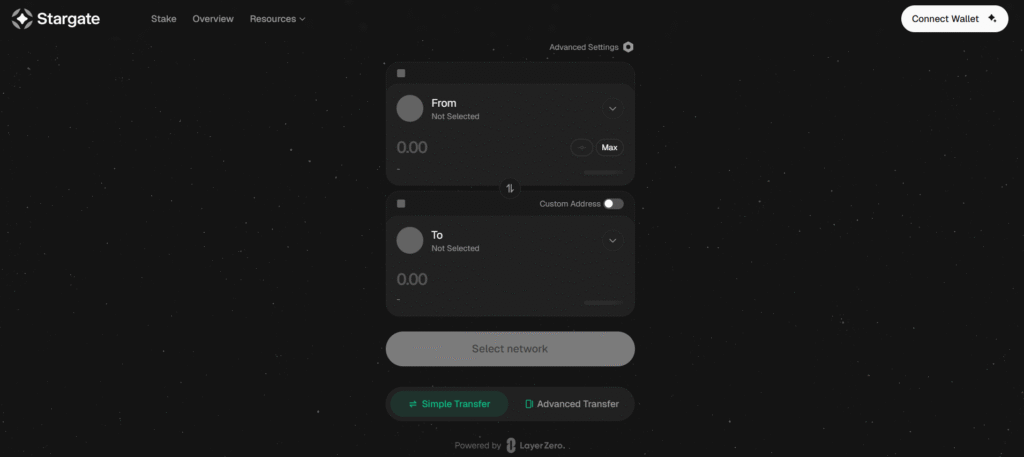
A cross-chain bridge enabling asset transfers between blockchains without centralized exchanges, using unified liquidity pools. Like all bridges, Stargate Finance carries smart contract and cross-chain exploit risk, bridge exploits have historically been among the largest single loss events in DeFi.
7. Galxe
Galxe is a Web3 campaign and identity platform that projects use to reward users and build on-chain reputation systems. It’s become a key onboarding tool in the BNB ecosystem, particularly useful for new users building a verifiable on-chain activity history across protocols.
8. Four.meme
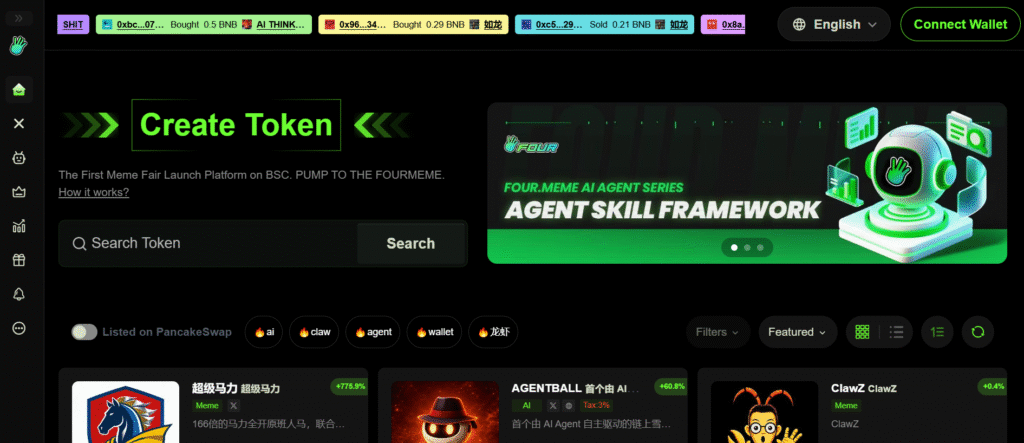
Four.meme is a memecoin launchpad integrated with BNB Chain liquidity. It drives high activity but carries extreme volatility and speculation risk, treat it as the highest-risk category on this list.
Emerging and Underrated BNB Chain DApps
Liquid staking innovation, real-world asset tokenization experiments, SocialFi platforms, and AI + DeFi integrations are gaining traction. These emerging web3 DApps on BNB Chain are best suited for early adopters, higher-risk traders, and developers testing EVM-compatible deployments.
Advantages and Limitations of Using BNB Chain DApps
BNB Chain DApps offer low fees, fast confirmations, strong liquidity, and EVM compatibility, but they also carry centralization tradeoffs, smart contract risks, regulatory uncertainty, and market volatility. In short, they’re efficient and accessible, but not risk-free.
Why Do People Prefer BNB Chain DApps?
Low Fees: Most low gas fee DApps on Binance cost under $1 per transaction. That makes smaller swaps, staking, and yield farming practical. You don’t need a large portfolio just to justify transaction costs.
Fast Settlement: Blocks confirm in roughly three seconds. The fastest DApps on BNB Chain feel smooth. Click, sign, confirm. No long waiting times.
Binance Ecosystem Liquidity: Because BNB Chain is closely connected to the broader Binance Web3 ecosystem, liquidity flows in quickly. That matters for DeFi apps on Binance where slippage and trade execution depend on deep pools.
EVM Compatibility: BNB Chain supports Ethereum’s virtual machine. Developers can deploy smart contract DApps with minimal changes. That’s why many best decentralized apps on BNB Chain feel familiar.
What Are the Limitations?
Centralization Concerns: BNB Chain uses fewer validators than Ethereum. That improves speed but reduces decentralization.
Smart Contract Vulnerabilities: Code can contain bugs. Even top audited DApps on BNB Chain are not immune to exploits.
Rug Pulls: Some newer or trending DApps on BNB Chain in 2026 may launch quickly and disappear just as fast.
Regulatory Exposure & Volatility: Crypto markets move sharply. Token prices fluctuate. Regulatory shifts can impact the Binance ecosystem DApp landscape.
Efficiency doesn’t remove risk. It just changes the tradeoffs.
How to Evaluate a BNB Chain DApp Before Using It
Before using any BNB Chain DApp, you should check its audit transparency, TVL trends, liquidity depth, team communication, and governance activity and verify the official contract address. In short, don’t rely on hype. Verify the fundamentals.
Is the code audited?
Serious projects publish third-party security audits. Look for reports from recognized firms and read the findings, not just the “audited” badge. Even the safest DApps on BNB Chain aren’t risk-free, but transparency signals professionalism.
Are TVL trends stable?
Total Value Locked shows how much capital users trust the protocol with. A steady increase suggests organic growth. A sudden spike followed by a sharp drop? That can signal short-term farming incentives or instability. Many top DeFi protocols on BNB Chain publish this data publicly.
Is liquidity deep enough?
Thin liquidity means high slippage. If you’re using DeFi apps on Binance to trade or farm, always check pool depth. Large trades in shallow pools quietly eat into profits.
Is the team communicating?
Active documentation, GitHub updates, governance proposals, and community forums are good signs. Silence is not.
Is governance active?
Healthy decentralized applications on BNB Chain often show ongoing proposals and community voting. Dormant governance can indicate stagnation.
Did you verify the contract address?
Always confirm the official contract address through the project’s website or BscScan. Fake clones are common, especially among trending DApps on BNB Chain in 2026.
Frequently Asked Question
Can BNB Chain DApps Run on Layer 2 Networks?
BNB Chain DApps primarily run on BNB Smart Chain itself, which is already designed for low fees and fast execution. BNB Chain achieves speed through its validator model. However, some decentralized applications on BNB Chain may integrate with other networks or bridges, allowing cross-chain functionality. In those cases, you’re interacting across ecosystems, not moving the DApp itself to a Layer 2.
What Happens If a BNB Chain DApp Team Disappears?
If the front-end website goes offline but the smart contract is still live, the protocol may continue functioning on-chain. Advanced users can sometimes interact directly through blockchain explorers like BscScan. However, without active developers, updates stop, bugs remain unresolved, and user support disappears. When evaluating the safest DApps on BNB Chain, active teams and transparent governance matter just as much as code.
Can You Lose Funds Even If a BNB Chain DApp Is Audited?
Yes. An audit reduces risk but does not eliminate it. Even top audited DApps on BNB Chain can face exploits due to unforeseen vulnerabilities, economic design flaws, or external dependencies like bridges. Think of an audit as a safety inspection, it improves confidence, but it’s not a guarantee. Always combine audits with strong TVL, liquidity depth, and responsible risk management when using DeFi apps on Binance.