Crypto Recap: Falling Prices, Harder Rules, and More Hacks
Crypto has been hit from multiple angles this month. Prices slid hard after October’s rally as whales sold, leverage unwound, and macro optimism cooled. Regulators also stepped up, signaling that stablecoins, exchanges, and taxes are heading toward stricter oversight. At the same time, hacks and exploits exposed ongoing weaknesses in both centralized platforms and DeFi.
Yet innovation hasn’t stopped. New privacy tools are emerging that could reshape how users interact on-chain and how regulators respond. Taken together, these stories show a market under pressure, one that’s maturing quickly, sometimes painfully, and forcing a reset in expectations around risk, transparency, and trust.
Here’s a quick recap of everything that happened in crypto in recent times before 2025 ends:
Market Pullback After October’s Run
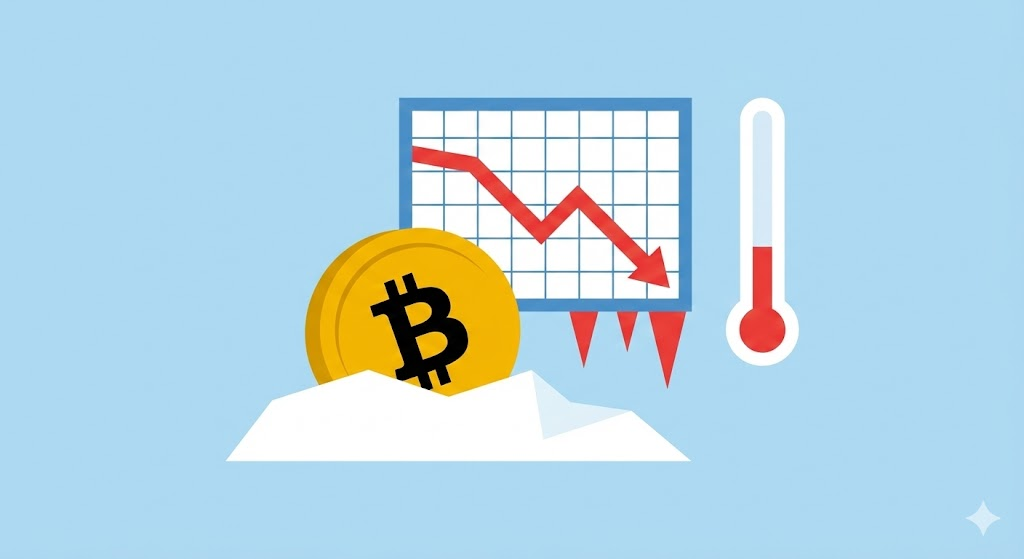
November hit crypto like a cold front. The market had just come off a hot October where Bitcoin cleared $120k and a bunch of altcoins set new highs.
Then momentum died.
By mid-to-late November, the entire market had shed more than $1 trillion. Bitcoin slid toward the high 80s and low 90s. Ether and Solana dropped even faster. And that’s still the case.
The slide came from one thing: supply flooding in.
On-chain trackers showed long-term holders and large wallets moving big chunks of BTC to exchanges or OTC desks. When whales sell tens of thousands of coins in short windows, it matters. Learn more about crypto whales here.
Reports pointed to roughly $41.6B in realized sales from an OG whale and later about 50,000 BTC, or $4.6B, changing hands. Crypto liquidity is thin compared to traditional markets, so a little extra supply can move prices a lot. Add retail traders getting margin-called and you get a fast, messy drop.
Macro pressure added weight. Hopes for quick Fed cuts faded. Miners faced lower profits as difficulty and energy costs squeezed margins, so some sold more Bitcoin to cover expenses. Risk assets cooled across the board, which pushed investors to reduce exposure.
This selloff isn’t the whole story, though. Institutional demand through spot-Bitcoin ETFs is still huge. These products have pulled in massive flows since launch. For instance, Bitcoin ETFs have become one of the revenue streams for BlackRock. Vanguard opening ETF access to 50 million clients is another sign that crypto exposure is sliding into the mainstream. ETFs can soak up supply and support prices, although they also concentrate a lot of influence in a few large firms.
For now, expect choppy action and shallow bounces until selling slows and macro signals settle. Traders face wider swings and liquidation risk. Long-term investors may find deals if they still believe in the cycle. And businesses that rely on stable liquidity need to watch ETF flows and whale activity closely since both now shape how fast the market moves in either direction.
Regulation Tightens as Crypto Grows Up

Regulators have been loud this season, and the message is pretty clear: crypto is growing up, and governments don’t want to be caught off guard again.
In the U.S., the FDIC basically confirmed that stablecoins are about to start playing by bank-style rules. Since stablecoins are designed to behave like digital dollars, regulators now want the same safeguards you’d expect from a bank: proper reserves, audits, risk controls, the whole thing. It’s their way of saying that if you’re going to issue something that acts like money, you’re going to be supervised like someone who handles money.
China took a very different route, but not a surprising one. The central bank repeated its warning that virtual currencies are risky and highlighted stablecoins as a growing concern. China has already shut the door on most crypto activity, and this is just reinforcement. They don’t want external assets influencing their financial system, and they’re making sure nothing slips through the cracks.
India’s stance feels similar in outcome but comes from a different place. The RBI governor called crypto a “huge risk,” partly to boost their own digital rupee. India wants a digital economy, but one that runs through official rails. They’re fine with digital money as long as the government issues it, not a random startup or anonymous team.
Then there’s Switzerland, which continues to be the calm adult in the room. Instead of cracking down, they’re moving from trial phases into actual integration. After years of being crypto-friendly, they’re now building long-term frameworks and letting businesses scale real applications. It’s essentially: “We tested it. It works. Let’s make it permanent.”
Japan, meanwhile, wants to simplify taxes. They’re pushing for a flat 20% tax rate on crypto gains, similar to stocks, which would make life much easier for everyday users who don’t want complicated tracking or weird tax categories.
Taken together, the trend is obvious. Crypto is shifting from its chaotic early era into something more regulated and predictable. For users, that means fewer loopholes, fewer scams, and more paperwork. For governments, it’s a race to catch up before the next big wave of adoption.
Hacks, Exploits, and the Security Squeeze

The past week offered another reminder of how fragile parts of the crypto ecosystem still are. In South Korea, Upbit, the country’s largest crypto exchange, disclosed a security breach that led to roughly $30 million in unauthorized withdrawals tied to Solana-based assets. Trading was quickly halted, funds were moved to cold storage, and authorities opened an investigation. The timing raised eyebrows, coming just hours after a major acquisition involving Upbit’s parent company was announced.
DeFi wasn’t spared either. Yearn Finance reported a smart contract exploit in its yETH product that allowed an attacker to drain about $9 million from liquidity pools. While some funds were recovered and core Yearn vaults were unaffected, the incident highlighted how even long-running protocols can still be exposed by edge-case bugs in custom code.
At the same time, regulators made their presence felt. Authorities in Switzerland and Germany shut down cryptomixer.io, a long-running crypto mixing service used to obscure the origins of illicit funds. Learn more about crypto mixers here. The operation seized servers, large volumes of data, and roughly €25–30 million in crypto, marking one of the most significant enforcement actions against crypto laundering infrastructure to date.
Taken together, the message is clear. Attacks remain a constant threat, whether through exchange infrastructure or smart contracts, while governments are becoming more aggressive in dismantling tools linked to crypto crime. With recent Anthropic research also showing AI agents getting better at identifying exploitable vulnerabilities, pressure is building from all sides. For users and investors, security assumptions are being tested again, and trust is becoming harder to earn.
Privacy Makes a Comeback On-Chain
Privacy tools are back in the spotlight, and this time it’s not just another mixer or short-lived experiment. Ethereum developers have introduced a new protocol called ZK Secret Santa, or ZKSS. The name sounds light, but the idea behind it is serious: giving users real privacy on-chain.
Right now, blockchains are fully transparent. Anyone can see wallet balances, transactions, and even behavior patterns. That openness helps with trust, but it also means zero privacy. ZKSS uses zero-knowledge proofs, a cryptography technique that lets someone prove something is valid without revealing the underlying details. In practice, it allows users to interact on-chain without exposing who they are or what they’re doing.
Learn more about how to stay anonymous in crypto here.
The goal is straightforward. You should be able to send tokens, vote in a DAO, or participate in a token drop without broadcasting your wallet history to the world. ZKSS aims to make that possible while still keeping transactions verifiable and secure. It’s a privacy layer that works within the existing rules of the blockchain, not against them.
This matters for markets because privacy is one of the biggest gaps in today’s major chains. If users and institutions can operate quietly without taking on extra risk, those networks become more attractive. Over time, that kind of demand can strengthen a chain’s fundamentals and support higher valuations.
There’s a tradeoff, though. Stronger privacy tends to raise regulatory concerns, especially around money laundering and hidden financial flows. If tools like ZKSS see real adoption, governments may respond with tighter oversight, which can add uncertainty and volatility.
Final Thoughts
Zooming out, the pattern is hard to miss. Crypto is moving from chaos toward structure, but not without friction. Prices are reacting to real supply pressure. Regulators are closing gaps fast. Security is under constant stress, especially as attack methods become more sophisticated.
The result is a market that feels more fragile in the short term but more defined in the long run. Fewer gray areas. Clearer risks. Higher stakes. Whether that leads to stronger adoption or tighter constraints will depend on how users, governments, and builders handle the next phase.