Smart Contract Audits: Why They Are No Longer Optional
The importance of smart contracts lies in their security, reliability, and trust. Smart contract audits review blockchain code before deployment to identify vulnerabilities, prevent exploits, and protect user funds once the contract goes live.
Why are smart contract audits so important in today’s Web3 landscape? Because once a smart contract is deployed on-chain, it’s usually irreversible. No undo button. No emergency patch. If the code has a flaw, that flaw becomes permanent, and attackers know it.
Over the last few years, DeFi exploits caused by smart contract bugs have resulted in billions of dollars in losses, according to industry reports and post-mortem analyses by security firms.
If you’re a founder or developer, this creates real pressure. You’re balancing speed, funding timelines, and user expectations, while knowing one mistake could destroy trust overnight.
This article answers the core question early and clearly. We’ll break down exactly how and why, step by step.
What Is a Smart Contract Audit?
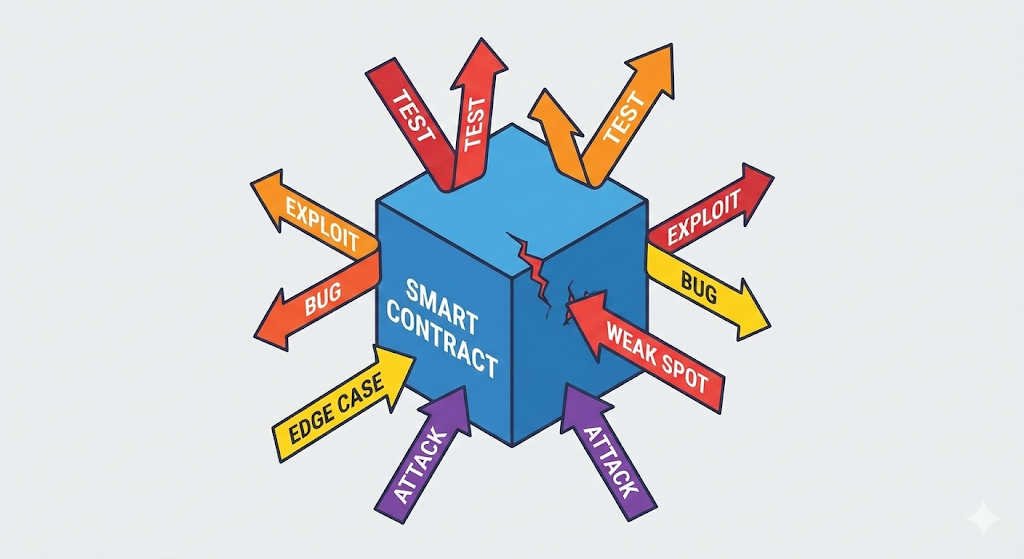
A smart contract audit is a deep security check of your blockchain code before it goes live, or before major changes are shipped. In simple terms, it answers one question: Can this contract be exploited, misused, or broken once real money is involved?
Think of it like inspecting a bridge before opening it to traffic. The bridge may look fine on the surface, but stress testing reveals weak joints.
Code Review vs Security Audit
A smart contract code review focuses on correctness and logic. Does the code do what the developer intended?
A smart contract security audit goes further. It looks for smart contract vulnerabilities, attack paths, and edge cases that attackers actively search for. Reviews catch mistakes. Audits catch exploits.
Automated Scanning vs Manual Analysis
Most smart contract audits start with automated tools. These scanners quickly flag common smart contract bugs like reentrancy or unchecked math. They’re fast, but limited.
Manual analysis is where real value comes in. Human auditors simulate attacker behavior, reason through complex logic, and spot issues tools miss.
Why Are Smart Contract Audits So Important?
Smart contract audits aren’t just a security checkbox. They sit at the center of smart contract security, user trust, and long-term survival.
- Most crypto losses come from code exploits, which audits help prevent.
- Audits protect user funds, TVL, and prevent rapid loss of trust.
- They signal credibility to users, investors, and exchanges.
- Audits improve code quality and long-term protocol design.
- They support risk management and regulatory readiness.
Preventing Costly Exploits and Hacks
Most major crypto losses don’t come from market volatility. They come from code. Reentrancy is a common example. It happens when a contract sends funds before updating its balance. Attackers exploit this by calling the same function again and again in a single transaction, draining funds before the contract can react. This is exactly what happened in the DAO hack.
Then there are logic flaws and broken access controls. Logic flaws occur when the code technically works but behaves badly in real situations attackers deliberately create. Broken access controls are simpler but just as dangerous, critical functions meant only for admins are left open, allowing anyone to mint tokens, withdraw funds, or change settings. These bugs aren’t rare or advanced. They’re known patterns that attackers actively scan for once money is live.
Protecting User Funds and Protocol TVL
In DeFi, trust is often measured in TVL (Total Value Locked), the total amount of user funds deposited in a protocol. Higher TVL signals confidence. When an exploit happens, that confidence breaks instantly. Users pull funds to avoid further losses, causing TVL to drop within hours.
Protocols that suffer smart contract exploits almost always see rapid capital flight, even if only one contract was affected. This matters because falling TVL doesn’t just reflect lost trust, it weakens liquidity, disrupts integrations, and makes recovery much harder.
Building User, Investor, and Institutional Trust
Audits function as a credibility signal in Web3. Most VCs won’t fund unaudited protocols, exchanges hesitate to list them, and experienced users check audit reports before depositing funds. Audits help build trust in Web3 projects by proving that teams take risk seriously and understand the consequences of failure.
Improving Code Quality and Protocol Design
The importance of smart contract audits extends beyond finding bugs. Auditors often identify inefficient gas usage, overcomplicated logic, fragile architecture, and weak upgrade paths. This feedback improves long-term maintainability and design quality, making audits especially valuable for complex audit for crypto projects that need to evolve safely over time.
Supporting Compliance and Risk Management
Regulation in crypto remains fragmented, but scrutiny is increasing globally. A blockchain security audit demonstrates due diligence, supports exchange onboarding, and reassures partners and institutions. While audits don’t equal legal compliance, they act as jurisdiction-agnostic signals of responsible governance and help reduce regulatory risk in crypto for serious Web3 teams.
What are the Risks of Skipping Smart Contract Audits?
History shows a clear pattern: weak or ignored smart contract audits lead to predictable failures. The DAO launched without a proper smart contract security audit, and a reentrancy flaw allowed attackers to drain around $60M in ETH.
Wormhole, despite having audits, suffered a $320M exploit after upgrades introduced unchecked edge cases, proving that a superficial or outdated blockchain security audit isn’t enough for complex systems.
In bZx’s case, auditors flagged risks around oracle manipulation and flash loans, but the protocol launched anyway, only to be exploited multiple times. The lesson is consistent: missing audits invite attackers, shallow audits miss real risks, and ignored warnings turn known issues into guaranteed losses.
How Smart Contract Audits Work (and What the Report Really Tells You)
Every smart contract audit starts with scope definition. Auditors decide exactly what code is being reviewed, specific contracts, dependencies, admin permissions, and upgrade paths. Then comes threat modeling, where auditors think like attackers. They map how money moves through the protocol and identify where real smart contract vulnerabilities could show up.
Next, auditors run automated testing and static analysis. These tools scan the code for known issues like reentrancy, unsafe external calls, or math errors. They’re fast and useful, but limited. That’s why automated vs manual smart contract audit isn’t a debate. Tools catch known bugs, and humans catch creative ones.
The most important step is manual, line-by-line code review. Auditors walk through the code the way an attacker would, testing edge cases and assumptions. This deep smart contract code review is where logic flaws, broken access controls, and economic exploits are usually found. No tool replaces this step.
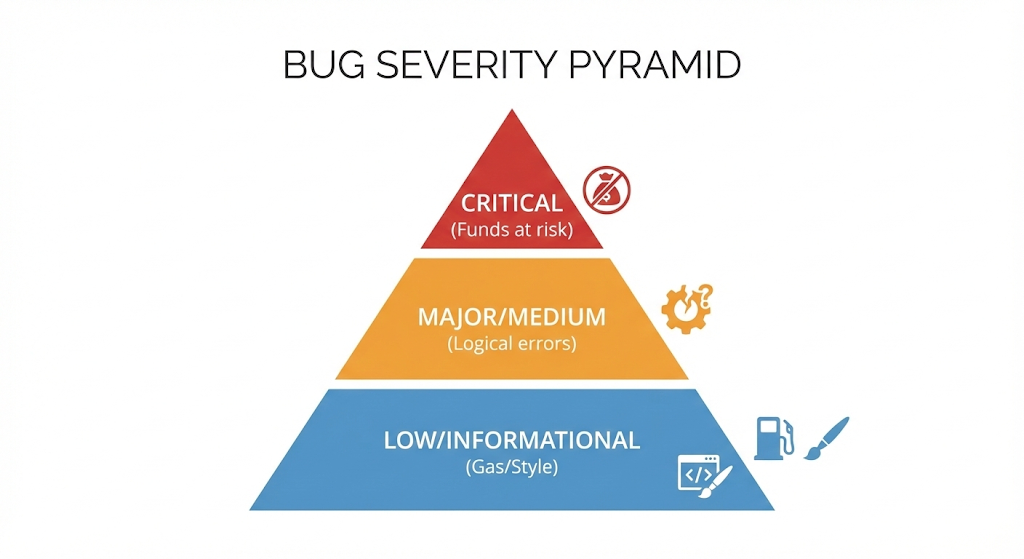
All findings are then classified by severity, from critical issues that can immediately drain funds to low-risk optimizations. Developers fix the problems, and auditors re-audit the updated code to confirm the fixes actually work. Skipping this step undermines the entire audit.
Finally, the audit report is published. It documents vulnerabilities, proof-of-concept exploits, fix recommendations, and, importantly, limitations. This is why “audit passed” never means risk-free. A blockchain security audit reduces risk at a specific moment in time. It doesn’t eliminate it forever.
Are Smart Contract Audits Enough on Their Own?
Short answer: no. A smart contract audit is essential, but it’s not a permanent shield. Audits are snapshots in time. They assess the code exactly as it exists during review. But protocols evolve. New features are added, dependencies change, and attack techniques improve. A contract that passed a smart contract security audit months ago can still become vulnerable today.
That’s why audits need support systems. Live protocols benefit from continuous monitoring that flags unusual behavior before losses spiral. Bug bounties also play a key role by incentivizing independent researchers to responsibly disclose flaws, effectively extending security audits for dApps beyond a single firm or moment.
Finally, upgrades matter. Every major change, sometimes even small ones, can introduce new risks. Triggering a fresh Web3 smart contract audit after upgrades reduces long-term exposure and signals maturity in compliance in Web3 practices.
When Should a Project Get a Smart Contract Audit?
Timing matters. A smart contract audit is most effective when it’s done at the right moments, not after damage is done.
Before mainnet launch
This is non-negotiable. Deploying unaudited contracts puts user funds at immediate risk and undermines trust from day one.
Before major upgrades
Even small changes can introduce new smart contract vulnerabilities. Every upgrade should trigger a fresh smart contract security audit.
After adding new features
New functionality changes attack surfaces. Re-auditing ensures new logic doesn’t break existing assumptions.
Before large capital inflows
Incentive programs, listings, or integrations increase attention from attackers. A blockchain security audit helps secure the protocol before value spikes.
Frequently Asked Questions
How much does a smart contract audit typically cost?
The cost of a smart contract audit varies widely based on code complexity, size, and risk exposure. Simple contracts may cost a few thousand dollars, while large DeFi protocols or bridges can run into six figures.
How long does a smart contract audit take?
A standard smart contract security audit can take anywhere from a few days to several weeks. Timelines depend on scope, code maturity, and how many rounds of fixes and re-audits are needed.
Can open-source smart contracts skip audits?
No. Open-source code does not equal secure code. In fact, public repositories make it easier for attackers to study vulnerabilities. Open-source projects still need smart contract audits to identify risks before adversaries do.