11 Best Solana dApps of 2025: The Ultimate Solana dApps Guide
Finding the best Solana dApps can feel overwhelming, especially when you’re new to Web3 and trying to figure out which apps are safe, reliable, and actually worth using.
dApps, or decentralized applications, are blockchain-based apps that run without a central authority. And Solana has quickly become one of the best ecosystems for them. Thanks to its ultra-fast speeds, sub-second finality, and near-zero fees, Solana now hosts some of the fastest and most scalable apps in crypto.
The ecosystem has exploded in 2024–2025, with Solana’s TVL growing by hundreds of millions, a surge in daily active users, improved network uptime, and major upgrades like Firedancer and priority fees making everything smoother.
This guide will help you cut through the noise. You’ll find data-backed rankings of top Solana dApps, a simple risk checklist, and tips to choose the right app, perfect for beginners and intermediate users who want a safe, confident start.
Why Solana Is Ideal for dApps
Solana is designed for speed. It can process 50,000+ transactions per second, which is far higher than most blockchains. This matters because dApps need quick, smooth interactions to feel usable, whether you’re swapping tokens, minting NFTs, or playing on-chain games. If the network is slow, every action lags, fees rise, and users drop off. Fast throughput keeps Solana dApps responsive, cheap, and scalable even during peak activity.
Read more about dApps here.
For comparison:
- Ethereum handles around 15–30 TPS, which is why gas fees often spike.
- Polygon manages roughly 7,000 TPS in ideal conditions.
More importantly, it offers sub-second finality, meaning your transaction is confirmed almost instantly.
Solana’s low fees are another big advantage. Most transactions cost around $0.0001, which is basically free. It lets developers create apps that rely on frequent on-chain interactions, like trading, gaming, minting NFTs, or managing yield, without worrying about users getting priced out.
Fees on other blockchains are much higher. Ethereum transactions can range from a few dollars to over $20 during busy periods, and even cheaper chains like Polygon usually cost more than Solana.
Read our full guide on reducing Ethereum gas fees here.
Another reason Solana stands out is its rapidly growing ecosystem. You’ll find everything here, DeFi tools, NFT platforms, gaming projects, on-chain social apps, RWA integrations, and many more Solana blockchain projects.
What “Best Solana dApps” Really Means
Solana has thousands of tools, games, wallets, and finance platforms, but not every Solana dApp is reliable or safe. When we talk about the top Solana dApps, we mean the ones that are fast, trusted, and actually used by real people every day. These are the best starting points for anyone exploring decentralized apps on Solana for the first time.
To choose the best Solana dApps, we focused on real adoption: daily active users, transaction volume, audits, team transparency, overall user experience, and platforms that solve real problems. In short, these are the apps that truly represent the Solana DeFi ecosystem and wider Solana Web3 apps, without the unnecessary complexity.
Best Solana dApps in 2025
1. Phantom Wallet (Best for Beginners)

Phantom is the wallet almost every Solana user tries first. It makes everything feel simple, from swapping tokens to viewing your NFTs.
You can do a lot without leaving the app:
- stake SOL
- make swaps
- connect to any Solana dApp
- store NFTs safely
If you’re new, Phantom is one of the easiest Solana apps to get comfortable with.
Check out our complete list of best Solana wallets here.
2. Solflare (Best for Staking & Power Users)
Solflare is great if you want more control and analytics. It’s non-custodial, supports hardware wallets, and shows deeper validator data.
It works especially well for:
- long-term stakers
- users managing multiple accounts
- people who want advanced security
Solflare is perfect if you’re planning to explore Solana more seriously.
3. Jupiter (Best for Swaps & All-in-One DeFi)
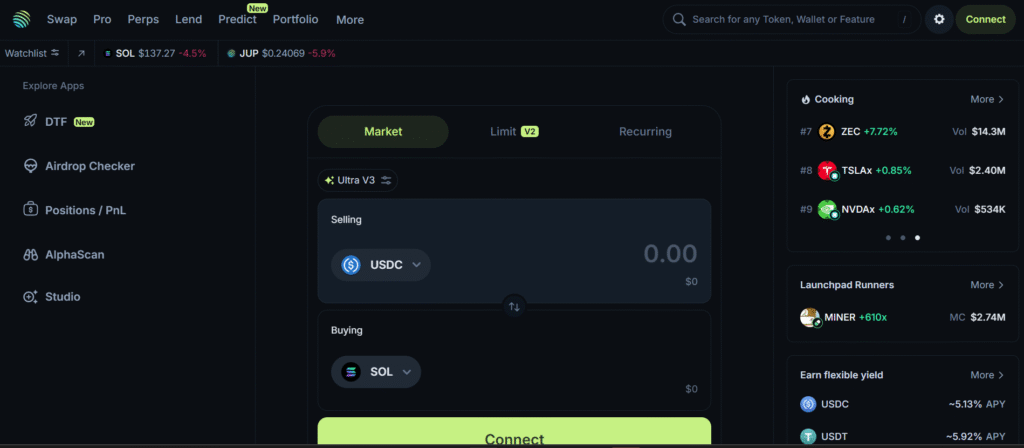
If you want fast and cheap token swaps on Solana, Jupiter is usually the first stop. It’s a DEX aggregator, which means it searches across all Solana liquidity pools to get you the best price for every trade, automatically.
Along with swaps, you can now:
- set limit orders
- automate buying with DCA
- lend or borrow
- stake SOL through JupSOL
Because it covers so much, Jupiter has become one of the top Solana dApps for anyone using DeFi on Solana.
4. Kamino Finance (Easy Yield & Liquidity Strategies)
Kamino is a yield platform built for people who want passive income without managing complicated DeFi strategies themselves.
It offers:
- automated liquidity vaults
- simple yield strategies
- cleaner UX compared to older Solana yield apps
Kamino handles all the complex parts in the background, so you can focus on earning. It’s great for beginners who want exposure to the Solana DeFi ecosystem without doing everything manually.
5. Marinade Finance (Best for Liquid Staking)
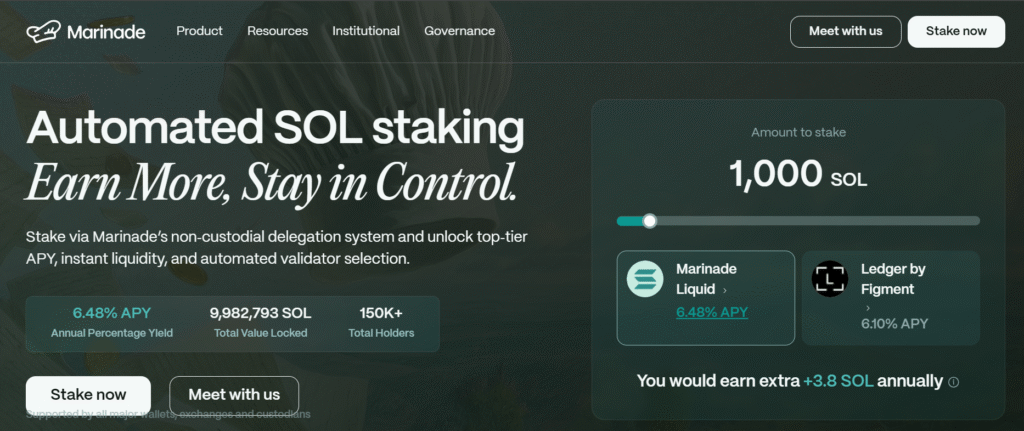
Marinade lets you stake your SOL and receive mSOL, a liquid token you can still use across other Solana dApps. This means you earn staking rewards and stay flexible, no lockups.
People like Marinade because it’s easy to use, it spreads stake across many validators and it works with almost every major DeFi protocol on Solana. If you want safe, long-term staking, Marinade is one of the best Solana apps for passive yield.
6. Tensor (Advanced Tools for NFT Traders)
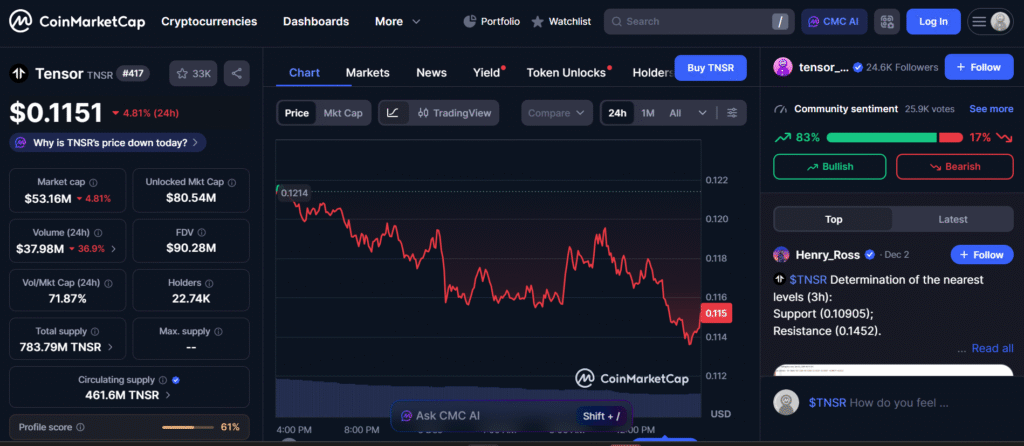
Tensor is a marketplace built for serious NFT users. It loads fast, gives you pro-level tools, and often has the best liquidity for Solana NFTs.
It’s known for:
- quick trades
- advanced charts
- bulk tools
- competitive pricing
If you like flipping or active trading, Tensor is the best Solana NFT dApp for that style.
7. Magic Eden (Most Popular Multi-Chain Marketplace)
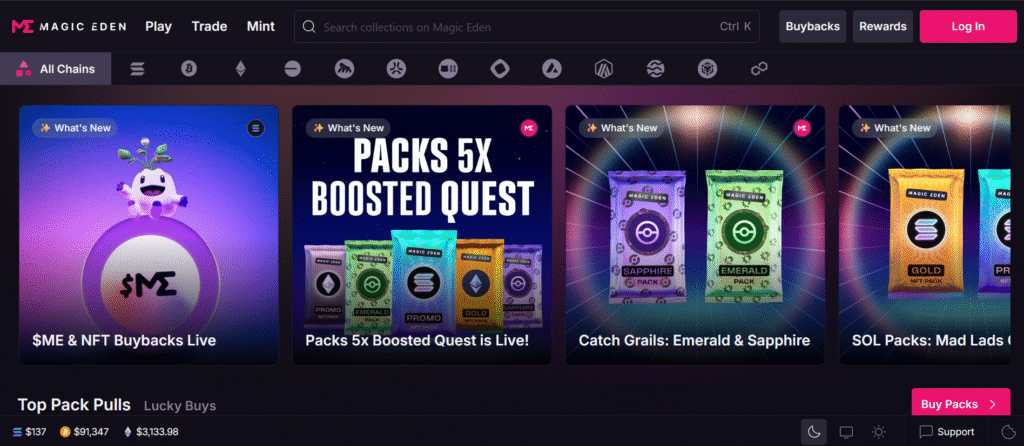
Magic Eden is the marketplace most beginners start with. It’s simple, clean, and has the widest variety of collections.
You can browse:
- art NFTs
- PFP projects
- gaming assets
- multi-chain collections
Magic Eden remains one of the most well-known Solana NFT marketplaces, especially if you’re exploring NFTs for the first time.
8. Jito (MEV-Optimized Staking & Higher Yields)
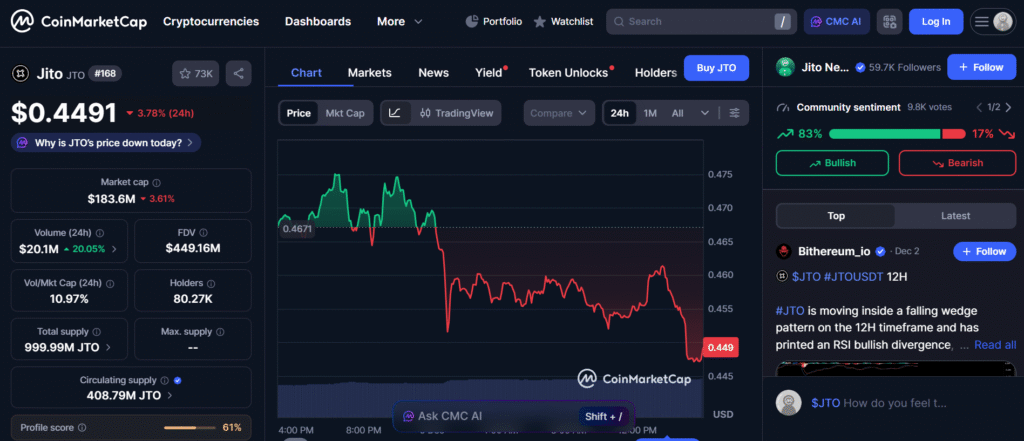
Jito is a staking platform that focuses on performance. Its liquid staking token, JitoSOL, lets you earn staking rewards plus extra yield from MEV (a type of value captured by optimized validators).
People choose Jito because yields are often slightly higher, the platform is backed by high-quality infrastructure and it integrates well across the Solana DeFi ecosystem. If you want efficient yield and trust a strongly-built validator network, Jito is an excellent choice.
9. Orca (Simple, Clean, Beginner-Friendly AMM DEX)
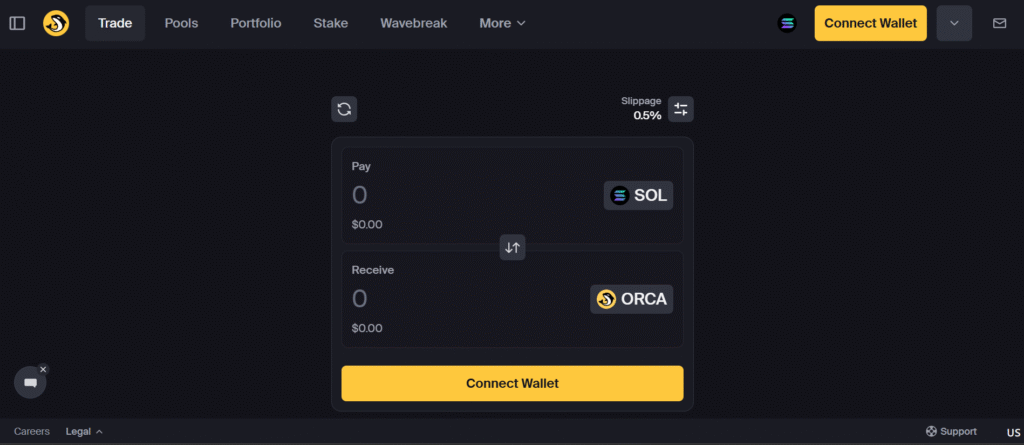
Orca is the most user-friendly AMM (automated market maker) on Solana. If Jupiter is where you go for the best swap prices, Orca is where you go for the smoothest experience.
Why users love it:
- super clean interface
- fast swaps
- very easy for beginners
- reliable liquidity pools
It’s often the first stop for new users who want to explore decentralized apps on Solana without dealing with complex interfaces.
10. Drift Protocol (Best for Perpetual Futures Trading)
Drift is the leading perpetuals trading platform on Solana. It’s built for traders who want more control and leverage, similar to using Binance Futures, but on-chain.
What Drift offers:
- perpetual futures with deep liquidity
- advanced trading tools
- low slippage, fast execution
- a smooth, exchange-like interface
For users transitioning from centralized exchanges to Solana DeFi apps, Drift is one of the best options.
11. Helium (Real-World Wireless Network on Solana)
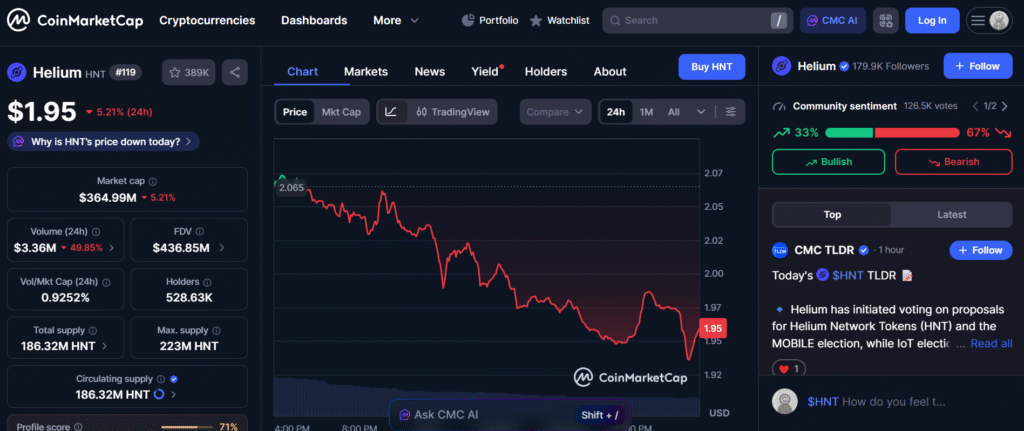
Helium is one of the most interesting Solana blockchain projects because it connects crypto with real-world infrastructure.
Helium migrated to Solana in 2023 and now runs its decentralized wireless network, including mobile and IoT infrastructure, on the Solana blockchain.
Why it’s impressive:
- real-world use case (mobile hotspots)
- large global user base
- fast, cheap transactions thanks to Solana
- strong example of what on-chain apps on Solana can achieve
Helium helps show that Solana dApps aren’t limited to finance or NFTs, the ecosystem supports real-world applications too.
What Users MUST Know Before Using a Solana dApp
Solana is fast and cheap, but it’s still crypto, meaning you should stay careful with your money. Every Solana dApp runs on smart contracts that cannot be changed once deployed, so any bug can cause real losses. The most common risks include re-entrancy attacks (fund draining), rug pulls (developers disappearing with liquidity), and oracle failures (wrong or manipulated price data).
Before using a dApp, check whether it has audits from reputable firms like OtterSec, Halborn, or CertiK. Audits don’t guarantee safety, but no audit is a red flag.
Crypto taxes also matter. Selling tokens, swapping, earning staking rewards, or receiving airdrops can all be taxable, so it’s smart to track activity early with a tool like Chainglance, especially if you use multiple Solana DeFi apps or Solana NFT dApps.
Read more about DeFi taxes here.
To check if a dApp is safe, look for:
- On-chain history: older, active contracts are usually safer.
- Verified contracts: prevents hidden malicious code.
- Liquidity locks: for tokens, ensure LP funds can’t be pulled instantly.
- Team transparency: real teams inspire more trust.
Finally, avoid new dApps offering unrealistic APYs. If returns look impossible, they usually are.
Frequently Asked Questions
1. What makes Solana dApps different from Ethereum dApps?
Solana dApps run on a faster and cheaper network. Transactions confirm in under a second and usually cost less than $0.0001. This makes Solana apps feel smoother and more beginner-friendly, especially for trading, gaming, and NFTs. Ethereum is more established, but Solana offers better performance for everyday on-chain activity.
2. Do I need SOL to use any Solana dApp?
Yes. You need a small amount of SOL to pay transaction fees. The good news is that fees are extremely low, so even a few dollars’ worth of SOL is enough to use most Solana dApps comfortably.
3. Can I use the same wallet for all Solana apps?
Yes. Wallets like Phantom or Solflare work across almost every Solana app, whether it’s DeFi, NFTs, staking, or gaming. Once your wallet is set up, you can connect to nearly any dApp in the Solana ecosystem with one click.
4. Do Solana dApps work on mobile?
Many of them do. Phantom’s mobile app lets you connect to most Solana dApps directly through your phone’s browser. NFT marketplaces, DeFi platforms, and staking apps all support mobile access, making it easy to use Solana on the go.